

“…and today we’re talking about a bug adoption. But more on that later.”
The insect world is a terrifying one. It’s a bug-eat-bug world out there. Some deal with it by being bigger, faster, stronger, or more numerous. Others have subtler ways of staying alive. The Mountain Alcon Blue caterpillar dons a clever disguise, not to trick the eyes but rather the heart and soul of its enemies; turning would-be predators into loyal subjects. But sometimes you just gotta know how to work the room like the Mountain Alcon Blue here in Life, Death, and Taxonomy.
Description of the Mountain Blue Alcon
Males display vibrant violet-blue uppersides, while females show more subdued blue basal areas mixed with brown spots.
The undersides are dark brown with small black spots ringed in white. Compared to the closely related Alcon blue (Phengaris alcon), P. rebeli often has broader black margins on the male’s upper wings and more extensive blue on the female’s basal areas.
Distinguishing them in the field can be challenging; altitude and host plant are often better indicators than subtle wing differences.
Measure Up
Welcome to the beloved Measure Up segment. The official listener’s favorite part of the show! The part of the show when we present the animal’s size and dimension in relatable terms through a quiz that’s fun for the whole family. It’s also the part of the show that’s introduced by you when you send in audio of yourself saying, singing, or chittering the words Measure Up into ldtaxonomy at gmail dot com.
Bye-Bye, Butterfree! | Pokémon: Indigo League | Official Clip
Wingspan
Adults have a wingspan of about 30–36 mm (about 1.2–1.4 inches).
One pair of Roman gold earrings with amethyst discovered in Medulin, Croatia (number 54) is representative of delicate personal adornments recovered from Roman sites in the region in the 2nd century.
True or False – The wingspan of the Mountain Alcon Blue is the same as the length of these earrings.
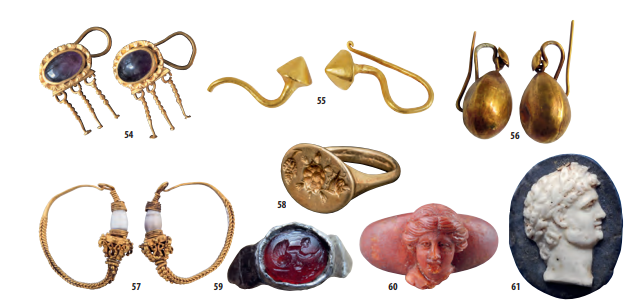
The earrings are 1.6 cm.
Larval Length
Caterpillars in later instars are 3–4 mm (0.15 inches) long
Springfield Armory’s Echelon comes in three sizes…one with a compact grip and two with a shorter barrel and slide assembly. True or False – The full size Echelon has a barrel length that is the same as 30 caterpillars.
The Echelon 4.5 has a 4.5 inch barrel. (They are also made in Croatia).
Fast Facts
This species lives in dry grasslands or meadows at lower elevations and damp meadows among trees in alpine zones.
They like altitudes of 1,000–2,000 m (sometimes lower).
You can find it across parts of the Palearctic, with core European populations in northern Portugal, the western Pyrenees, France, eastern Germany, Croatia, and Greece. Subspecies extend into the Caucasus, Central Asia, and parts of East Asia.
P. rebeli is now often treated as an ecotype or high-altitude form of the broader Phengaris alcon complex rather than a fully distinct species.
Genetic and physical differences are small and usually tied to habitat adaptation. But, some experts still separate them for conservation purposes due to distinct ecological requirements.
They lay their eggs on cross-leaved gentian (Gentiana cruciata). Young caterpillars feed inside the flowers and developing seed pods.
Adults live only a few days on average (around 1–2 days in some studies), but females can lay dozens of eggs per day during their brief flight period. They focus heavily on finding suitable gentians for oviposition.
Major Fact: The Road to Smeldorado
- Ants love to eat caterpillars, but Mountain Alcon Blue caterpillars face the threat head on.
- Rather than stay above the teeming colonies below, this guy attaches a line of silk to a plant and does a mission impossible descent to the awaiting ants.
- But these ants don’t eat him, they worship him.
- He infiltrates ant colonies by mimicking the chemical signals (pheromones) of ant larvae.
- Once inside, they don’t just blend in—they produce subtle vibrations and sounds that imitate ant queens or larvae, making it so that they get priority when rations are passed out.
- Ants respond to these signals by treating the caterpillar like royalty—feeding it and protecting it from harm.
- These rhythmic signals are created by specialized organs that “stridulate” (rub together) like a microscopic percussion instrument.
- The caterpillar sweetens the deal by secreting sugary substances, essentially bribing the ants with snacks.
- This relationship solves the caterpillar’s biggest problem: survival in a dangerous world full of predators. Why hide when you can outsource security to an easily bribable detail like the Pinkertons?
- While being pampered, the caterpillar may also consume actual ant larvae—so it’s not exactly a fair trade agreement.
- The ants remain loyal due to the convincing combo of chemical mimicry and rhythmic manipulation—like a long con that involves hypnosis.
- This parasitic strategy allows the caterpillar to grow safely underground until it’s ready to pupate.
- Even as a pupa, it continues producing signals to maintain its VIP status until it emerges as a butterfly and ghosts the entire colony.
Ending
So face the threat head on, play the right beats, and fake it till you make it like the Mountain Alcon Blue here in LDT.