
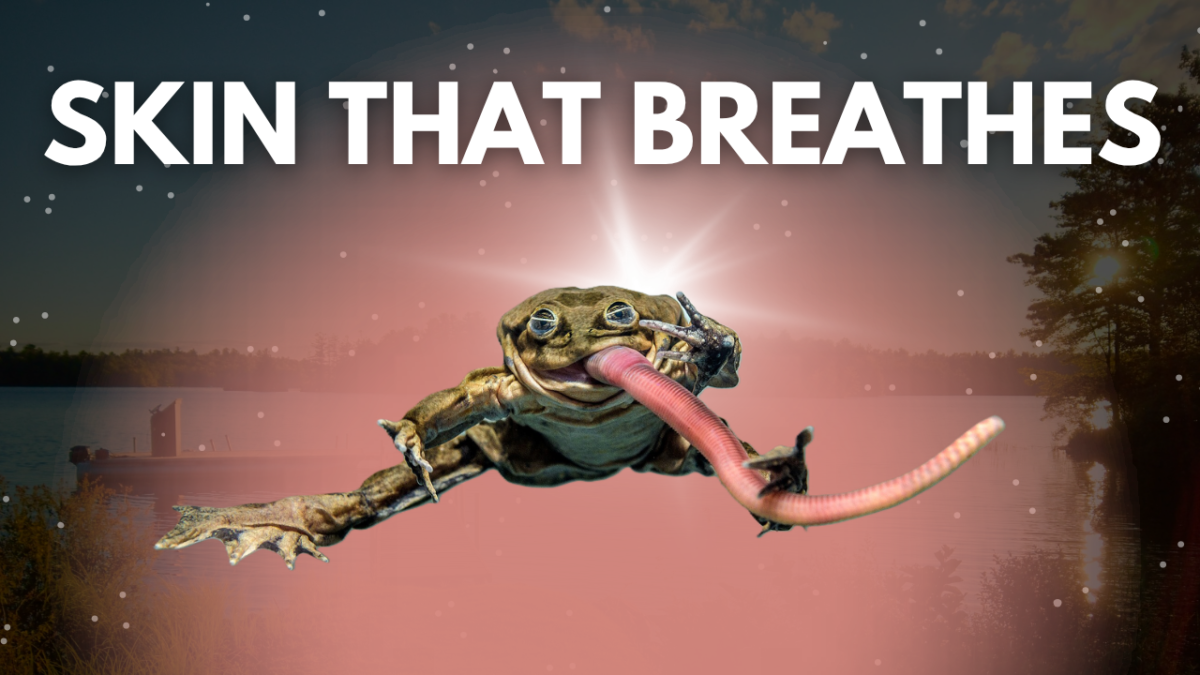
“…and today we’re talking about a frog with a funny name that we’re going to be mature about! But more on that eminently.”
A special frog lives at the bottom of a lake on top of the world… Lake Titicaca is the highest navigable waterway on earth, and it’s home to an amphibian that’s gone full aqua! But how does a creature with lungs never come up for air? Well… answers are rarely only skin deep in Life, Death and Taxonomy.
Description of the Titicaca Water Frog
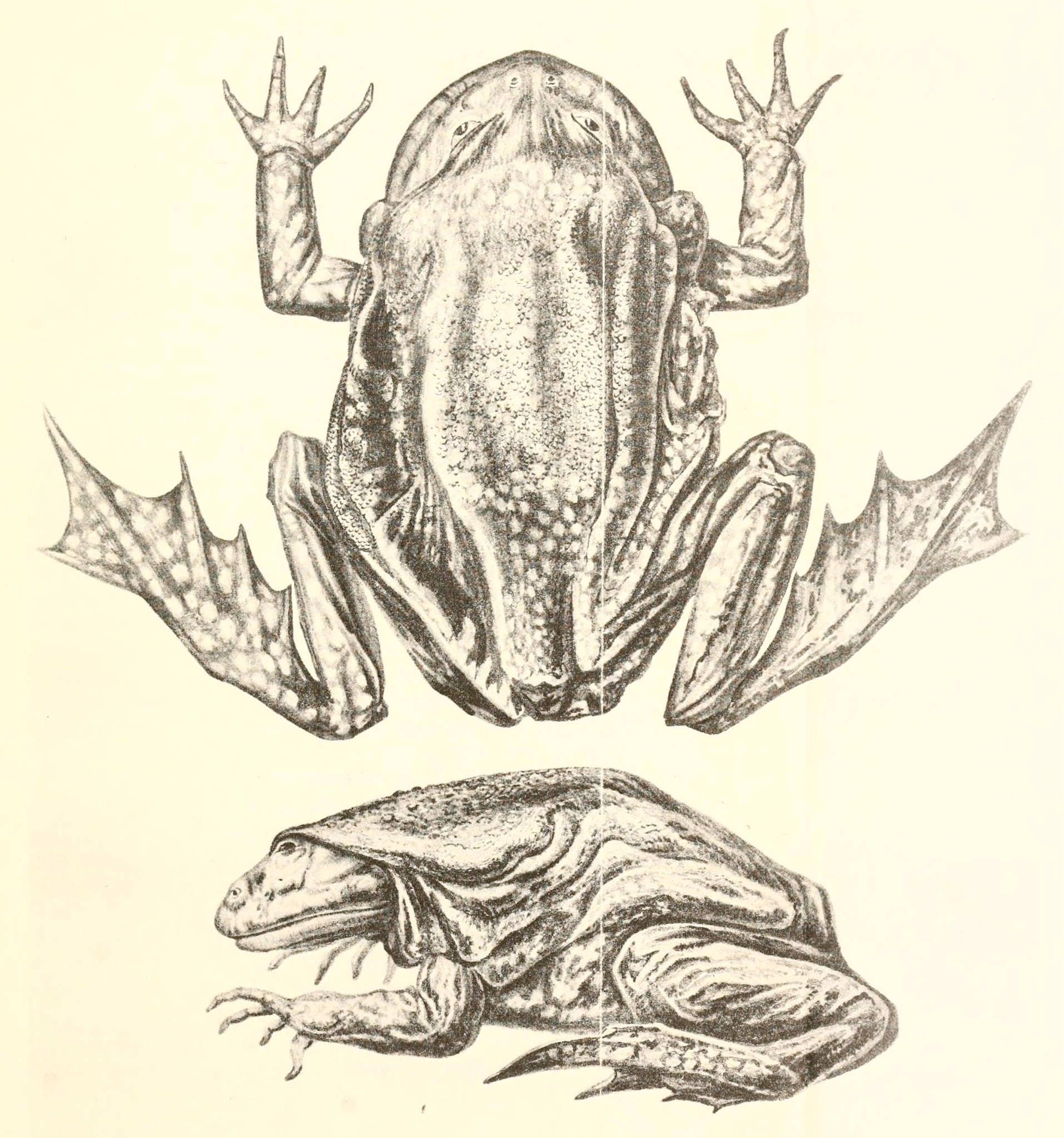
- Looks like someone melted a regular frog and then said “yeah, that’s fine, ship it”
- Body is covered in excessive loose, baggy skin that hangs in folds
- Color ranges from grayish-green to brown, often matching the murky lake water
- Flat, wide body that seems built for chilling at the bottom rather than winning any frog beauty pageants
- Small head with a perpetually unimpressed expression
- Webbed feet for swimming, though it looks more like it slowly oozes through water than swims
- Eyes sit on top of the head
Measure Up
Welcome to the beloved Measure Up segment. The official listener’s favorite part of the show! The part of the show when we present the animal’s size and dimension in relatable terms through a quiz that’s fun for the whole family. It’s also the part of the show that’s introduced by you when you send in audio of yourself saying, singing, or chittering the words Measure Up into ldtaxonomy at gmail dot com.
”Baron Silas Greenback” from Danger Mouse
Body length (snout to vent)
Typically about 5–10 cm (2–4 inches)
The SS Yavari is a British-built iron steamship commissioned by Peru in 1861 (alongside its sister ship Yapura) for use on Lake Titicaca. It was the first steamship to operate on the world’s highest navigable lake. Today, it’s preserved as a museum and bed-and-breakfast and is the oldest iron lake steamer still afloat. True or False – 400 Lake Titicaca frogs go into the length of Yavari.
The Yavari is 100 ft (30 m) long.
Weight
0.4 kg (0.9 lb) Extremes go up to 1 kg (over 2 pounds)
The Sayhuite Monolith is a large carved stone at the Sayhuite archaeological site in Peru, featuring over 200 geometric and animal figures such as frogs, reptiles, and felines. About 2 meters long and 4 meters wide. True or False – 20,000 frogs go into the Sayhuite Monolith.
The monolith is 25 tons.
Fast Facts about the Titicaca Water Frog
- Range: Found exclusively in Lake Titicaca along the border of Peru and Bolivia
- Habitat: Likes the cold, high-altitude, fresh water of the Lake, often hanging out along the bottom
- Diet: Feeds mostly on small invertebrates like insects, snails, and crustaceans—basically whatever floats or crawls by slowly enough.
- Behavior: Not big on movement; it prefers to stay relatively still and let life come to it
- Mating: Breeding happens in water, with females laying hundreds of eggs that hatch into tadpoles—standard frog business, just with more wrinkles involved.
- Lifespan: Can live around 10–15 years in the wild if it avoids pollution, predators, and humans
- Predators: Birds, fish, and humans are the main threats, the last of which is unfortunately the most creative.
- Similar to east Asian traditions, locals of the Lake have a habit of using animals for folk medicine.
- These frogs are captured by the thousands and ground into what must be a ghastly smoothie in order to cure TB, infertility, asthma, and even as an aphrodisiac.
- They’re also eaten for their legs by tourists
- Plus, mining in the mountains causes toxic runoff that makes its way into the Lake
- Sounds: Produces low, underwater calls that sound less like a ribbit and more like a muffled aquatic complaint.
Major Fact: Way of the Wrinkle
The Titicaca water frog lives only in the lakes and rivers of the Lake Titicaca basin, typically at depths greater than 10 meters. Jacques Cousteau, exploring the lake in a mini submarine, recorded these frogs and even their tracks at a depth of 120 meters (400 feet)—the deepest ever recorded for any frog species.
But frogs are amphibious right? How do they breathe as adults?
Maybe they never develop lungs, and just keep their gills? Nope, they are lunged up as adults.
But their lungs are relatively unimportant compared to their skin.
Skin as a “gill substitute”
Instead of relying on lungs, it uses cutaneous respiration (breathing through the skin). Its body is covered in loose, wrinkled folds that increase surface area. More surface area means more oxygen can diffuse directly from the water into its bloodstream.
Why the wrinkles matter
And they are super wrinkley. Lake Titicaca sits at very high altitude, where oxygen levels are low. Smooth-skinned frogs wouldn’t get enough oxygen this way, but these exaggerated folds act almost like external gills, maximizing oxygen absorption in a thin, oxygen-poor environment.
Movement to boost oxygen intake
They don’t just sit still—they often perform slow “push-up” motions on the lakebed. This behavior helps circulate fresh, oxygenated water over their skin, improving gas exchange. This is kind of similar to how gills move to pass more water over them, or how sharks keep moving to get the oxygen flowing.
Reduced reliance on lungs
They do have lungs, but they’re small and play a minor role. Most of their oxygen intake—and carbon dioxide release—happens directly through the skin.
Blood and circulation tweaks
They also have relatively high red blood cell counts, which helps transport the limited oxygen they absorb more efficiently throughout their body.
Red blood cells carry oxygen using hemoglobin. Compared to many other frogs, Titicaca water frogs have:
- More red blood cells per unit of blood, and
- Often higher hemoglobin concentration
This means their blood can carry more oxygen overall.
Put together, these adaptations let them live almost entirely underwater in conditions that would suffocate most other amphibians.
Ending: So take it easy, chill at the bottom of your favorite lake, and always remember to breathe through your burlap sack like the Titicaca Water Frog here in LDT.
Thanks Patrons!
Thank you so much for your support, it’s greatly appreciated! And thanks for helping us keep the lights on.
- Chordata
- Jessi Raspolich
- Carole Raspolich
- Animalia
- Wednesday Rabbit
- Michael
- Bev
- Rowan
- Richard Kaspar
If you’d like to donate just visit patreon.com/ldtaxonomy or click on donate on our website. And also thank you to everyone who has submitted measure ups, animal recommendations, as well as emails and comments. We love to hear from you and get feedback on what you like and how we can improve. Our office hours are all hours so please email us with whatever’s on your mind at ldtaxonomy@gmail.com.