
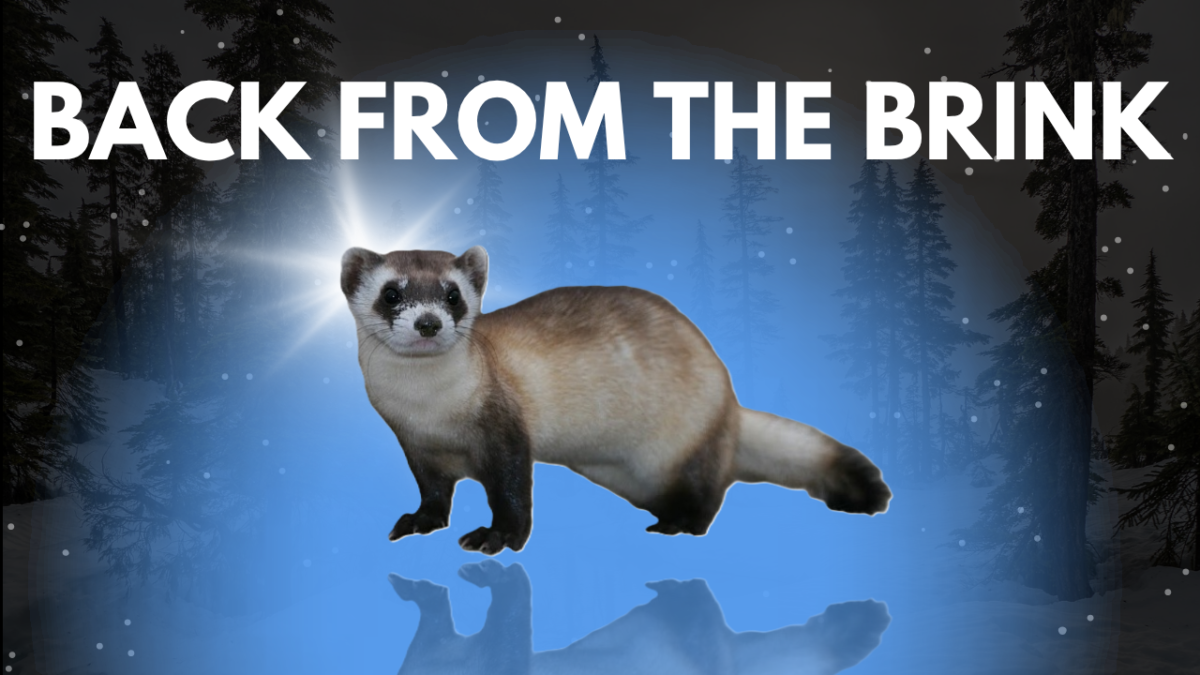
“…and today we’re talking about a Lazerus noodle. But more on that later.”
The worst thing that can happen to a species is extinction. The balance of life and death tips towards oblivion… a corner of creation relegated to rejoin the dust. People are often the problem…but we’re getting better at finding solutions. One small wild ferret was on the brink of disaster until it was astonishingly restored to the cycle of Life, Death, and Taxonomy.
A very special thank you to our patrons. Thank you so much for your support, it’s greatly appreciated, thanks for helping us keep the lights on. If you’d like to donate just visit patreon.com/ldtaxonomy or click on donate on our website. Also, a thank you to “im in ur walls” on Spotify for suggesting this animal.
Description of the Black Footed Ferret
- Long, slender noodle of a mammal
- Pale yellow to buff-colored fur with a lighter underbelly
- Distinct black “bandit mask” across the eyes
- Feet and lower legs dipped in black
- Short legs, long neck, and a tail that’s fluffy
- Tiny rounded ears
- Overall about the size of a skinny housecat
Measure Up
Welcome to the beloved Measure Up segment. The official listener’s favorite part of the show! The part of the show when we present the animal’s size and dimension in relatable terms through a quiz that’s fun for the whole family. It’s also the part of the show that’s introduced by you when you send in audio of yourself saying, singing, or chittering the words Measure Up into ldtaxonomy at gmail dot com.
Shackleford
Clifford’s Really Big Movie (2004) Party Time scene HD
Total length (nose to tip of tail)
18–24 inches (46–61 cm)
In 1988, local Montana rancher Kathy Wankel discovered a nearly 85% complete Tyrannosaurus rex skeleton in the Hell Creek Formation on an island in the Charles M. Russell National Wildlife Refuge. It has come to be known as the Wankel Rex or “The Nation’s T-Rex.” True or False – 19 ferrets go into the length of the Wankel Rex.
The Wankel Rex is around 38 feet (11.6 meters) long.
Body Weight
1.5 to 2.5 pounds (1.13 kg)
Anzu wyliei (“Chicken from Hell”) is a large oviraptorosaur with a crested head, long neck, and bird-like features. Named in 2014, because it was discovered in Hell Creek. True of False – 264 ferrets go into the weight of Anzu Wyliei.
Anzu Wyliei was around 200–300 kilograms (440–660 pounds) when he was alive?
Fast Facts about the Black Footed Ferret
- Range: Native to the Great Plains of North America, mostly in places like Wyoming, South Dakota, and Montana after being reintroduced.
- Habitat: Lives almost exclusively in prairie dog towns because apparently it’s all about that real estate.
- Diet: Prairie dogs make up about 90% of its diet—this thing is basically a highly specialized exterminator.
- Hunting: Sneaks into prairie dog burrows like a furry burglar and ambushes prey in tight tunnels.
- Behavior: Mostly nocturnal and solitary.
- Mating: Breeding season kicks off in early spring, and males roam around looking for mates.
- Lifespan: Around 3–4 years in the wild, longer in captivity.
- Sounds: Makes hisses, chatters, and chuckles.
- Predators: Hawks, owls, coyotes, and badgers all see it as a snack.
Major Fact: Demolition Ferret
We thought the black-footed ferret extinct in the wild twice in the 20th century (once in the late 1950s–1970s, and again after a small rediscovered population in South Dakota died out by 1979).
In 1981, a rancher’s dog named Shep brought home a dead ferret near Meeteetse, Wyoming — revealing a tiny surviving population. That sparked the modern recovery program.
By 1987, the last 18 wild individuals were captured to start captive breeding. From those founders, conservationists have bred and released thousands, with hundreds now living in the wild across reintroduction sites.
This makes it one of North America’s greatest conservation success stories so far. But what about genetic diversity?
All current black-footed ferrets descend from just a handful of ancestors, leading to low genetic diversity and vulnerability to diseases like sylvatic plague. To fix this, scientists had to do something that had never been done.
There is a “Frozen Zoo” at the San Diego Zoo Wildlife Alliance…it is a wildlife biobanks which preserves living genetic material (cryopreserved at -196°C / -320°F) for future use in saving species. The “zoo” keeps over 11,500 cell lines representing more than 1,300 species and subspecies.
The Frozen Zoo
In 2020, scientists were able to use the back by cloning a ferret named Elizabeth Ann from frozen cells of another ferret named Willa (who died in 1988 and had no living descendants). This was the first time humans cloned a U.S. endangered species.
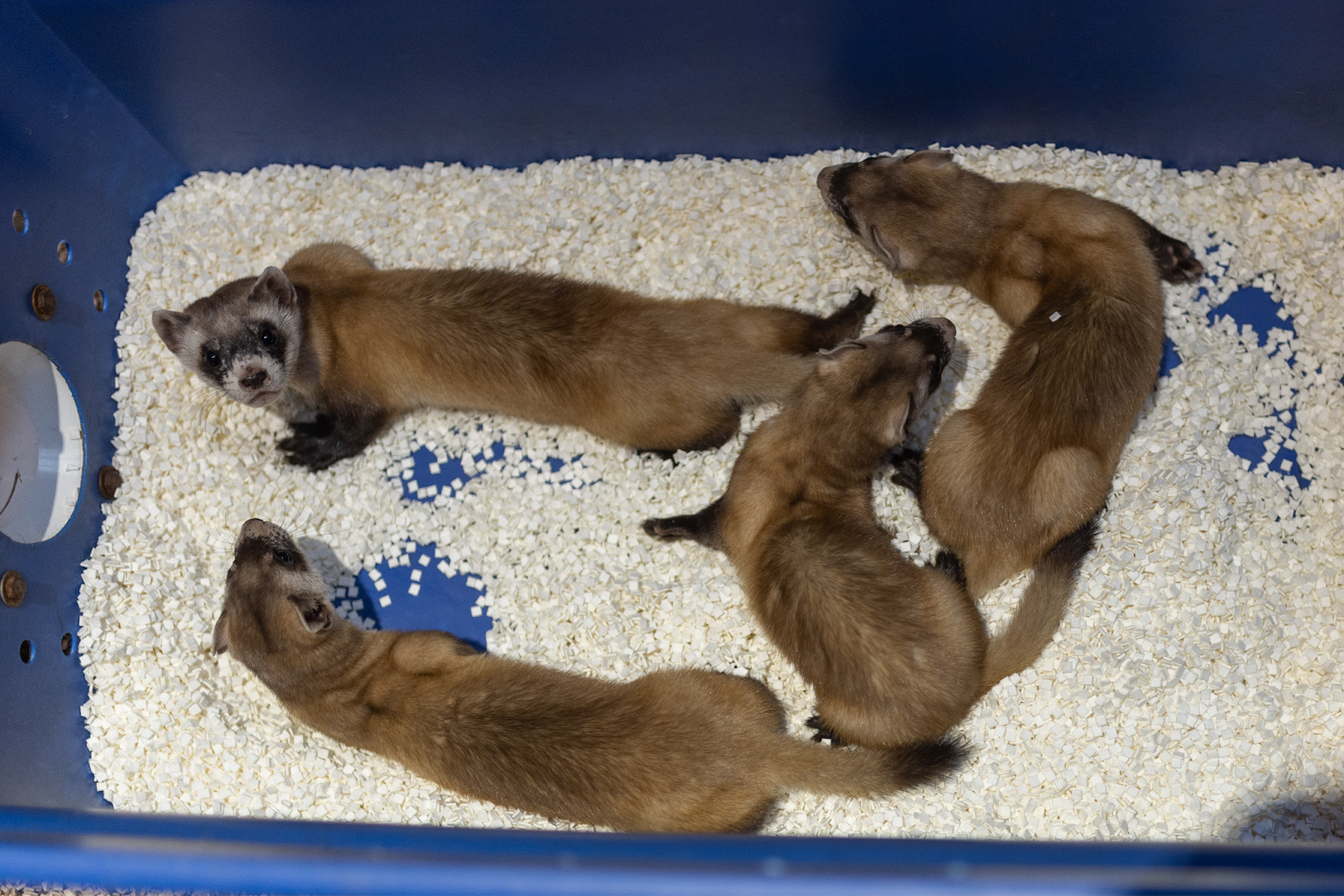
More clones followed (Noreen and Antonia). In 2024, cloned ferret Antonia gave birth to healthy kits — the first offspring from a cloned endangered animal in the U.S. These kits carry valuable lost genetic diversity (Willa’s genome had about three times more variation than modern ferrets).
Combating Genetic Problems
Scientists are using cloning as a tool to combat low genetic diversity and inbreeding in the captive population, which helps the species become more resilient to threats like sylvatic plague.
The births highlight decades of collaborative conservation work involving the U.S. Fish and Wildlife Service, Smithsonian’s National Zoo, Revive & Restore, ViaGen Pets & Equine, San Diego Zoo Wildlife Alliance, and other partners.
Cloning is not a replacement for traditional recovery efforts. Obviously, too much cloning also risks genetic issues… but it enhances traditional conservation when a population gets low.
Ending
So go out to the ball game, get a prairie dog from the prairie dog stand, and get cloned back into existence.