Episode 108 – Cicada: The Brooding Bug

“And today we’re talking about a periodic pest. But more of them later.”

All across the eastern U.S., a tenacious bug makes a long-awaited debut. Teeming just below the ground beneath your feet, millions of cicadas will wait years to emerge into the wild blue yonder. But why do they wait so long? And how do they know how long to wait? It’s all a game of numbers as this bug ensures its survival with the awesome power of math here in Life Death and Taxonomy.

Episode 107: Disco Clam: Saturday Night Survivor

“…and today we’re returning to an old friend, but we’re going to hear the other side of the story.”

Today we’re returning to familiar territory. We’ve covered a brilliant and formidable predator that seems to be unstoppable because of its powerful punch. But there’s at least one item on its menu that’s not going into the ring unprepared. But when you’re going up against the tidal Tyson, you’re probably not going to win in a slug-fest. Instead, this clever clam turns to a brilliant tactic to outsmart the killer crustacean. But sometimes it pays to be bright in Life, Death, and Taxonomy!

Episode 106 – Wels Catfish: Some Fishy Tales

“…and today we’re talking about a fish of legend for which meat is back on the menu.”

If you ever find yourself swimming in the freshwater lakes and streams in Europe, you may want to keep an eye on dark waters below. The Wels catfish may not have the teeth or temperament of a shark or crocodile, but it has just as fearsome of a reputation. Known for centuries as a man eater, the Wels catfish may be the deadliest freshwater fish to date. But we’ll just have to find out how true the stories are here in Life Death and Taxonomy.

Episode 105 – Great White Pelican: Feeding Friends. See?

“… and today we’re talking about an animal that’s great and white. No, not that great white animal! More on that later.”

Food is limited and the flock is many. For most animals, seeking to feed yourself first and then resting to conserve energy, is the best way to survive. But without the aid of rigorous cost-benefit analysis, some animals see fit to cooperate with one another to find food. That can mean expending precious caloric resources to feed someone else. But why? For many animals, it’s worth it to walk the razor’s edge between cooperation and resource guarding. When food is hard to get on your own, it may be time to work together in Life, Death, and Taxonomy.\

Episode 104 – Goliath Birdeater: Along Came a Spider

“…and today we’re talking about a spider that sat down beside her and tilted the bench under its immense weight, spilling curds and whey everywhere.”

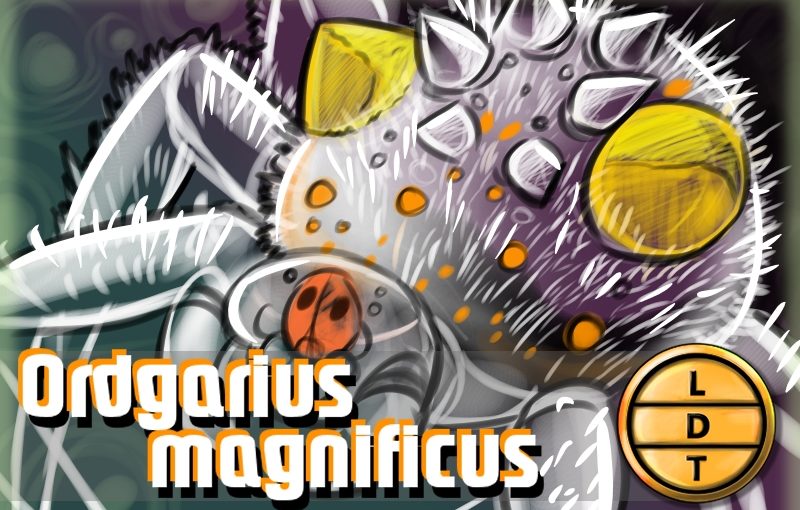
Tarantulas are big. The Goliath Birdeater Tarantula is even bigger. But being big doesn’t mean you don’t have enemies and predators to deal with. So how do you handle them? Well, you could try and bite them with your venomous fangs, but you might run into logistical issues not having a neck and all. So you might need a trick up your sleeve for when things get hairy here in Life Death and Taxonomy.

Episode 103 – Babirusa: Toothy Baby Ruthy

“And today we’re talking about a big pig with interesting headgear, but more on that later.”

The jungles of Indonesia have provided several episodes of interesting animal info so far. The terrain seems to provide a smorgasbord of offbeat animals. But none may be as strange as a particular forest pig with an odd dental deviance that leaves all the interested researchers. Some adaptations have a clear purpose, giving an animal an advantage in daily life. However, some abilities or anatomical anomalies seem to only provide a disadvantage to an organism. But mystery is something that any intrepid animal enthusiast must embrace in the exploration of Life, Death, and Taxonomy. 

Episode 102 – Turritopsis Jellyfish: To Be Young Again

“And today we’re talking about a tiny little long-lived sea booger. But more on that later. The long lived stuff. Not the booger stuff.”

Description

  • Like many sea creatures, the jellyfish is found all over the world’s oceans.
  • They prefer temperate to tropical regions. 
  • They are believed to have originated in the pacific but may have traveled all over the ocean in ballast water.
    • Ballast water is water that’s used to fill tanks in the hulls of ships to maintain balance, especially in high winds.
    • Tanks fill at one port and discharge at the second port.
    • Sometimes, animals find themselves in ballast water to be deposited somewhere else in the ocean.
  • The jellyfish is a bell shape and transparent except for their orange or red center bits.
  • It has short tentacles that range from 8 to 90 

Episode 101: Treehopper – Leaping Bug Teens

“And today we’re talking about a tiny helicopter with some interesting upward momentum.”

Tiny insects are key menu items for a lot of creatures in the kingdom animalia. To be small and tasty is a recipe for doom if you don’t have some interesting survival tactics. Entire orders of insects start in vulnerable metamorphic stages called nymphs. There are so many, we’ve identified some nymphs having no knowledge of their adult stages. Some of these bug babies have developed a way to get around and avoid predation that’s a marvel of organic mechanics. But by the 101st episode, we’ve come to learn that  amazing avoidance abilities are often the key to Life, Death, and Taxonomy.

Episode 100 – Potoo: A Funny Feathered Extravaganza

“…and today we are talking about an animal for the 100th time and we’re announcing the winner of the listener’s favorite part of the show vote!”

The official listener’s favorite part of the show is…. Measure Up! That’s right! You came out to the polls and let your voices be heard. With Twitter and Facebook polls combined, 65 percent voted for Measure Up as their favorite segment. I want to thank everyone who voted especially those came out to vote and ended up liking the FB page! But since it was such a close race, it’s clear that Critter Groups has it’s cult following, so it’s not going anywhere. 

Episode 99 – Pallas Cat: Mr. Whisples

And today we’re talking about a wide eyed and expressive cat! But more on that later!

They may look like your average domestic feline on the surface. But a closer look will reveal some odd features. Thick fur, short stubby ears, and rotund bodies, give away that this particular Himalayan cat isn’t your typical tabby. But there’s something else. Maybe you can’t quite put your finger on it, but they seem so… expressive. Their relatable facial expressions have made them internet sensations, but there’s a reason humans might look into these big yellow eyes and find them relatable. But what makes their faces so intriguing? Find out in Life, Death, and Taxonomy.